

VULNERABLE
RED-BELLIED LEMUR
EULEMUR RUBRIVENTER
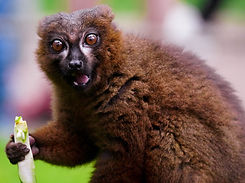
Red-bellied lemurs Red-bellied lemurs are small primates endemic to the eastern rainforests of Madagascar. They are characterized by their chestnut-brown fur, white "teardrop" eye patches on males, and are cathemeral nature, meaning they are active both day and night.
The pair of red-bellied lemurs who call Fife Zoo home are part of the European Ex Situ Programme (EEP).

HABITAT
Red-bellied lemurs are native exclusively to the eastern rainforests of Madagascar, inhabiting both primary and secondary evergreen forests.
DIET
Red-bellied lemurs are primarily fruit-eaters, with their diet consisting heavily of fruits, flowers, nectar, and leaves from over 70 different plant species.
They are active foragers in the rainforest canopy of Madagascar and supplement their diet with insects and invertebrates, particularly when other food is scarce
BEHAVIOUR
Red-bellied lemurslive in small family groups, consisting of two parents and up to four young, with the female leading the group.
Males use scent glands to mark their territory, and they also mark females when competing for a mate.
Red-bellied lemurs are arboreal. Most of their active time is spent foraging in groups, taking turns as “sentinel”: one group member watches for predators, like birds of prey or fossa, while the others forrage.
THREATS
Lemurs are the most endangered mammal group in the world.
Red-bellied lemurs are Vulnerable on the International Union for Conservation of Nature (IUCN) Red List of Threatened Species.
Habitat loss due to logging, agriculture and fire is one of the biggest threats to lemur numbers, as well the pet trade.